

BFA Mills College, Oakland, CA; MFA School of Visual Arts, NY; MA in Interactive Media Arts from Tisch School of the Arts, NYU
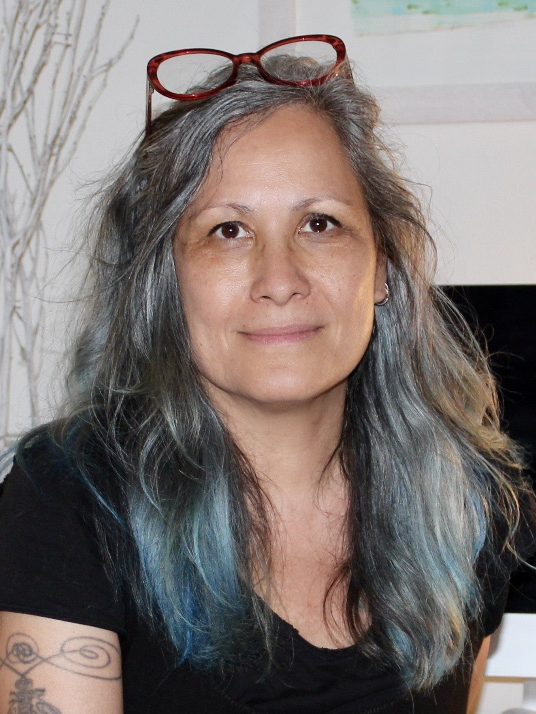
Monika Lin holds an MFA from the School of Visual Arts in New York City and an MA in Interactive Media Arts from NYU Tisch School of the Arts. Her work interrogates social-political themes emphasizing various frameworks - imperial and colonial legacies; labor; ecologies of the Anthropocene; questions of myth and materiality; and the social relevance of art through dialogue, collaboration and relational experience. She is particularly interested in the way materials and collaborative experiences can challenge hierarchical structures. She is an Associate Arts Professor of Visual Arts at New York University Shanghai teaching art praxis and theory and runs Pollinator in Philadelphia, an arts and activity space focusing on community-based projects, a local artist in residency program, and collaborative art-making.
Notable exhibitions and installations include Kasko Gallery in Basel, Fleisher Memorial in Philadelphia; the 2021 Shanghai Biennale; public sculptures in Qiandaohu and Nanjing; the Power Station of Art Museum in Shanghai; Toomey Tourell Fine Art in San Francisco; The China Academy of Art, Hangzhou; the Sichuan Fine Art Institute, Qongqing; the Chiang Kai Shek Museum, Taipei; and Big Fish Museum in Beijing. She has attended residencies at MASS MoCA, Edition/Basel, Kala Art Institute in Berkeley, NYU in Madrid, Social Sensibility in Beijing, and the Pottery Studio in Jingdezhen with upcoming residencies at the Vermont Studio Center in Johnson, Vermont and Art Print Residency in Barcelona, Spain. Artist talks and workshops include the Shanghai Biennale; the Sichuan Fine Art Institute; the Power Station of Art, Shanghai; the Kansas City Art Institute; MediaLab, Madrid; Mural Arts of Philadelphia; and the Museum of Chinese in America, NYC. Editions of her artist book, Traditional Medicine, are in the special collections at the Philadelphia Central Public Library, Swarthmore College, and Bryn Mawr College.
Select Exhibitions
Solo
- 2025 Fleisher Art Memorial, Philadelphia, PA
- 2017 From the Bones of the Fish, Central Booking Gallery, NY, NY
- 2012 Tenthousand, Performance Art Institute, San Francisco, CA
- 2010 Medusa, Art Labor Space, Shanghai, China
- 2010 Small Offerings, Toomey Tourell Fine Art, San Francisco, CA
- 2010 Child Palace, Art Labor Gallery, Shanghai, China
- 2005 Double Happiness, Toomey Tourell Fine Art, San Francisco, CA
- 2003 Red Shoes, Kidder Smith Gallery, Boston, MA
- 2002 Untitled Exhibition, Dennis Morgan Gallery, Kansas City, MO
- 2001 New Work, Toomey Tourell Fine Art, San Francisco, CA
Group
- 2026 Folds, Koslo Gallery, Basel, Switzerland
- 2026 Disturbing the Surface, Noyes Museum, Stockton University, Hammonton, New Jersey
- 2025 Temple Contemporary, Temple University, Philadelphia, PA
- 2025 The Street, Big Fish Museum, Beijing
- 2025 Ely Center of Contemporary Art, New Haven, CT
- 2024 At the Edge of Darkness and Light, CFEVA, Philadelphia, PA
- 2023 Philadelphia Center for the Book, Central Philadelphia Library, Philadelphia, PA
- 2022 Color of Light 2, Public Sculpture, Qiandaohu, China
- 2022 No-Mad - Rooted in Becoming, Konzepthauslaboratorium, Thun, Switzerland
- 2021 Shanghai Biennale, Shanghai, China
- 2021 Soft City 2.0, Sichuan Fine Art Institute, Qongqing, China
- 2021 Ponds Among Ponds, ICA Gallery, NYU Shanghai, China
- 2021 International Exhibition, Peninsula Museum, Weihai, China
- 2020 Chengdu Sculpture Park, Public Sculpture
- 2018 Growth, Art Labor Gallery, China
- 2017 Color of Light, Public Sculpture, Nanjing, China
- 2017 To Be Like Water?, Why Why Art Center, Hangzhou, China
- 2017 10th year anniversary exhibition, Art Labor Gallery, Shanghai, China
- 2016 Time Share, Project Space, Brooklyn, NY
- 2016 Ordinary Metropolis, Power Station of Art, Shanghai China
- 2016 Intimate Transgressions, 4, Chiang Kai Shek Museum, Taipei, Taiwan
- 2014 Asia Arts Initiative, Philadelphia, PA
- 2014 What if Objects Could Talk?, OV Gallery, Shanghai, China
- 2013 Excavating Layers, Richmond Art Center, Richmond, CA
- 2013 Learning from the Literati 4, OV Gallery, Shanghai, China
- 2012 Learning from the Literati 3, OV Gallery, Shanghai, China
- 2012 Cold Comfort, OV Gallery, Shanghai, China
- 2011 Refracted Realities, OV Gallery, Shanghai, China
- 2011 Red, Toomey Tourell Fine Art, San Francisco, CA
- 2010 Shifting Definitions, OV Gallery, Shanghai, China
- 2010 Centennial Celebration of Women in Art, Shanghai Fine Art Museum, Shanghai China
- 2007 Scope Miami, Miami, Florida
- 2007 Art Beijing, Beijing, China
- 2005 Scope Miami, Miami, Florida
Select Residencies and Awards
- 2026 MASS MoCA,
- 2026 Edition/Basel, Basel, Switzerland
- 2025 Kala Art Institute, Berkeley, CA
- 2024 Social Sensibility, Beijing, China
- 2024 Mural Arts, Philadelphia, PA
- 2022 Public Art Grant, China Academy of Art and the Hangzhou Park Commission Sculpture
- 2021 Pottery Workshop, Jingdezhen, China
- 2020 Chengdu City Art Residency and Sculpture Grant, Chengdu, China
- 2019 Global Research Initiative Fellowship, NYU Madrid, Madrid, Spain
- 2019 NYU Green Grant, NY, NY
- 2018 Pottery Workshop, Jingdezhen, China
- 2017 Public Art Grant, China Academy of Art and the City Art Council of Nanjing, China
- 2014 Pottery Workshop, Jingdezhen, China
- 2010 San Francisco Performance Art Institute, SF, CA
Courses Taught:
- Printmaking in an Expanded Field
- Chinese Woodblock Printmaking: A Socially Engaged Graphic Art From
- The Graphic Novel
- Foundations of Painting: Painting in Practice and Theory
- Foundations of Visual Arts
- What is Art?
- Art and the Anthropocene: Material-Based Activism
- Site and Situation
- Typography in the Urban Environment